
Can I Take my Lease Vehicle Abroad?
If you’re thinking of traveling abroad and are thinking of taking your lease car with you, it is important that you have the correct documentation in place before you travel.
To make things easier, we have put together a 5 step checklist to prepare you for traveling abroad
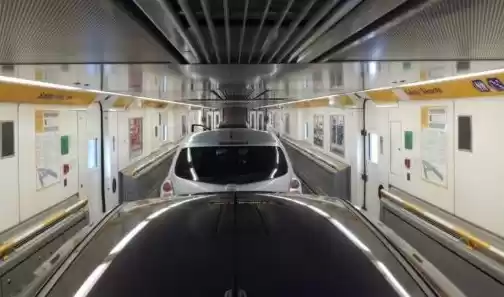
1. Contact your Finance Provider
Before you leave for your trip, you will need to contact your finance provider to get the relevant permissions to take the vehicle abroad for a specific amount of time. It is vital that you speak to your finance provider directly to discuss your options and to arrange for the appropriate paperwork to be sent in advance of your trip. Failure to obtain the correct permissions and paperwork could result in delays on departure or could even see the car impounded.
If you need to find out the contact details for your finance provider, feel free to call us on 01942 311508 or email us on info@leasepartner.co.uk.
2. Ensure you have the right paperwork
If you want to take your car to another country, alongside your full valid UK driving license, you will need to fill in a Vehicle-on-Hire-Certificate (VE103B) form. This is a legal document that acts as an alternative to the V5C logbook and gives authorization from the finance provider, as they are the legal owner and keeper of the vehicle, for the driver (you) to take the lease or hire car abroad. The VE103B includes the details of the vehicle such as registration number, make, and model. The form also confirms the name and address of the person leasing the vehicle as well as the length of the contract.
3. Check your breakdown and motor insurance
Whether you are traveling abroad or here in the UK, it is your responsibility as the contract holder to ensure that your vehicle is insured. If you are planning on taking the car abroad It is important that your breakdown and motor insurance covers, you for driving on the continent.
Some insurers will downgrade the level of protection for European cover to the most basic level, so before you set off make sure you check what insurance cover you have and determine whether you need to add it.
Do not forget to check with your insurer as to whether you need a green card. This is a certificate that acts as a proof of insurance in Europe and could help when making a claim abroad. In most countries, this isn’t required anymore but if it is you’ll need to take it with you, along with your insurance documents.
4. Familiarize yourself with local driving laws
A couple of weeks before you are set to leave, take the time to familiarise yourself with the local driving laws. These include speed limits, road signs and road markings. Many countries have specific laws in place which require the driver to carry additional equipment in the vehicle so make sure you’re fully aware of what you need to take before you leave.
Local Driving laws
GB Sticker
Make sure your GB sticker is clearly visible on the back of your car If your number plate does not already include it. The GB letters must be black on a white, elliptical background and must be at least 80mm high with a stroke width of 10mm
CRIT’Air
Clean Air Emission StickerParis, Lyon and Grenoble legally require all vehicles to display a ‘clean air’ sticker on the windscreen to identify its emissions levels
Vehicle Safety Kit
Many countries in Europe require by law that you carry a first aid kit, fire extinguisher, warning triangle, reflective jacket, headlamp beam reflectors and spare bulbs.
Breathalyzer Kit
All drivers heading to France will need to carry a personal breathalyzer kit with two disposable testing units.
Children-Friendly Seat Belts
Families travelling to France should be aware that children under the age of 10 are not permitted to travel on the front seats of vehicles without a special child restraint.
Snow chains and/or Winter Tyres
During winter months, many countries require the vehicle to be fitted with winter tires or for the vehicle to carry snow chains.
The AA has a handy document (link below) which offers country-specific advice about the compulsory equipment requirements, as well as information on local laws.
https://www.theaa.com/european-breakdown-cover/driving-in-europe/what-do-i-need
5. Prepare your vehicle for a trip
Finally, as you should with any long trip make sure your vehicle is in good condition before you set off. A simple way to do this is to carry out a POWER check
• Petrol (or diesel) - Make sure you have enough fuel to get to your destination and that you know where the next fuel station is.
• Oil – Be sure to check the oil levels before you leave.
• Water – Make sure the water levels are OK before you leave and don’t forget to top up the windscreen washer fluid too.
• Electrical – Ensure all lights are working and are not dim. Don’t forget to check if you need to take a full set of replacement bulbs if this is required in the country you are travelling to.
• Rubber - Check the condition of your tyres, the tread depth and that they are inflated to the correct pressure for the car weight with passengers and load.